

Electrical transformers are crucial equipment in almost every industrial or commercial setting. This article will give you a better understanding of electrical transformers and a deeper insight into their working principle and types.
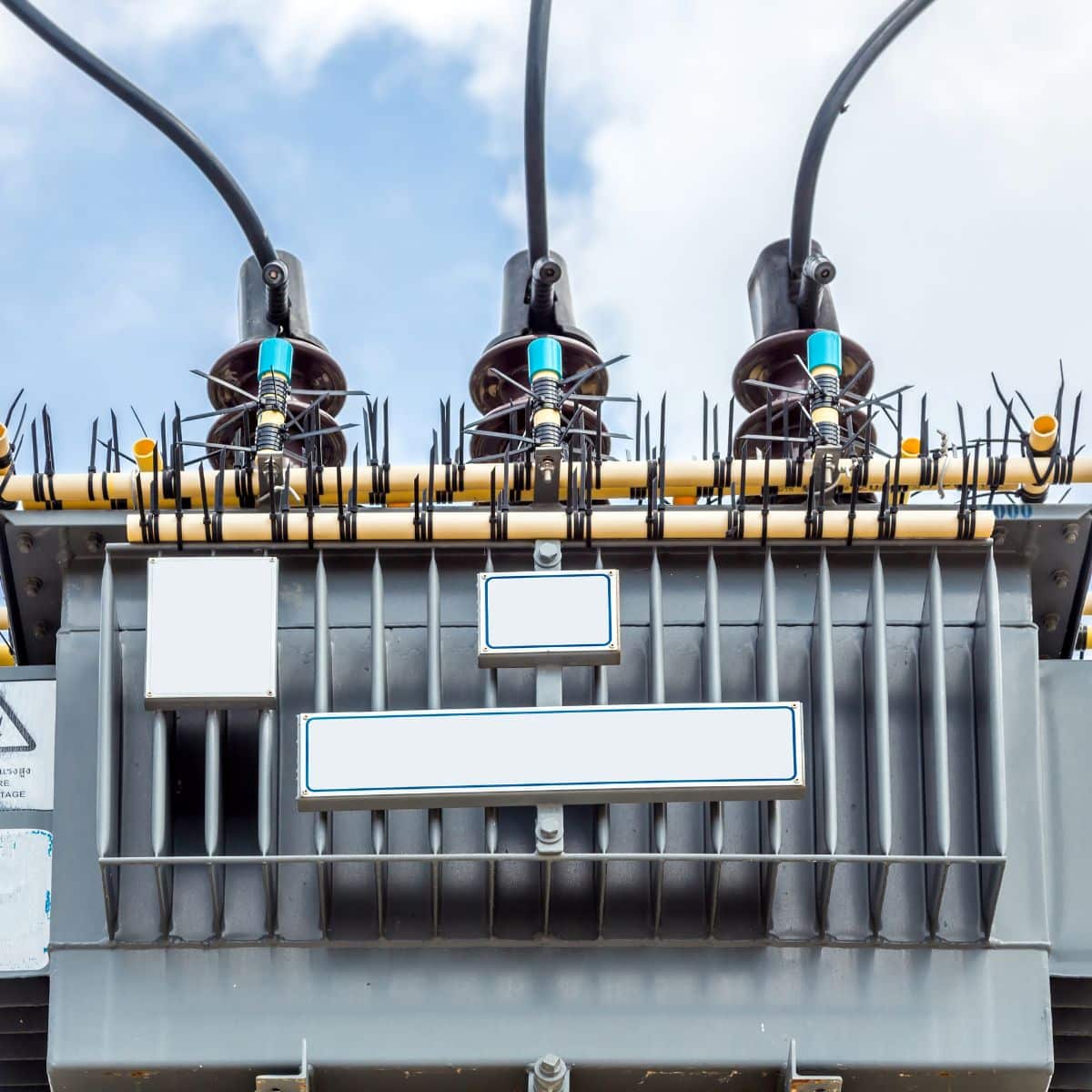
What is an Electrical Transformer?
An electrical transformer can be described as equipment designed to step voltage up or down and make it usable. Its working principle is based on magnetic induction, and it does not have any moving parts. It transfers current from one circuit to another and changes voltage levels.
They are now intended to utilize an alternating current supply, which implies that fluctuations influence fluctuations in supply voltage in current. As a result, an increase in current will increase voltage and vice versa. Moreover, an electrical transformer exhibits the energy conservation law, which states that energy cannot be generated or destroyed, only converted!
Transformers help improve the power system's safety and efficiency by adjusting voltage levels. This is why they are frequently found in various domestic and industrial applications, most notably in the distribution and regulation of power across vast distances.
The Design of an Electrical Transformer
An electrical transformer consists of three crucial elements: a magnetic core, a primary, and a secondary winding. All three of these parts play a different role in the proper functioning of an electrical transformer. First, the primary winding is connected to the electrical source, which initially produces flux. Next, these coils are insulated from one another, and the main flux is induced in the primary winding, which is then transmitted to the magnetic core and linked to the secondary winding of the transformer through a low reluctance channel.
Electrical transformers do not have any moving parts, making them highly reliable and durable electronic equipment. Under operating conditions, a well-designed and well-built transformer can be anticipated to operate consistently and trouble-free for years.
For projects where longevity and strict specifications matter, it helps to work with manufacturers that specialize in made-to-order distribution and transformer solutions. Companies such as Elliott Industries provide custom-engineered electrical equipment for utilities, OEMs, and industrial customers while maintaining rigorous quality controls. Asking prospective suppliers about their testing procedures, customization capabilities, and service support will clarify whether their products can meet long-term operational demands. This due diligence complements sound transformer design and helps ensure the installed equipment performs reliably for years.
The Working Principle of an Electrical Transformer
An electrical transformer operates based on Faraday's electromagnetic induction law, which states that "the rate of change of flux linkage concerning time is directly proportional to the induced EMF in a conductor or coil." It normally has two windings: primary and secondary. These windings share a laminated magnetic core, and the mutual induction between these circuits aids in the passage of electricity from one point to another.
When the primary coil receives voltage, the core is magnetized, and voltage is induced, or stimulated, in the output or secondary coil. The voltage difference (voltage ratio) between the primary and secondary coils is determined by the coil's turns ratio. Next, the transformer is turned on, and the "load" begins to draw current (measured in amperes, or amps) at the voltage the transformer was designed to deliver.
Types of Electrical Transformers
There are various types of electrical transformers, and they are categorized based on core and winding construction and core materials. They are:
- Transformers with Cores
The primary and secondary windings surround the core in these types of transformers. The layer of these transformers is formed by combining two L-shaped steel strips and stacking them.
- Transformers with Shells
The core covers the main and secondary windings in shell-type transformers. These transformers' cores are built by combining E-shaped and I-shaped steel strips and stacking them to produce a layer.
- Autotransformers
Autotransformers are made of a single winding that is tapped at various locations along its length. As a result, autotransformers are smaller and less expensive than conventional double-winding transformers with the same VA rating.
Collaborate With a High-Quality Service Provider
Suppose you are looking to buy high-quality, long-lasting electrical transformers for your establishment, then we recommend that you research and find out about the providers that offer highly efficient custom electrical transformers and inductors along with comprehensive engineering, design, and manufacturing services. An electrical transformer is a one-time investment, and customers should be careful when choosing their provider.


Leave a Reply